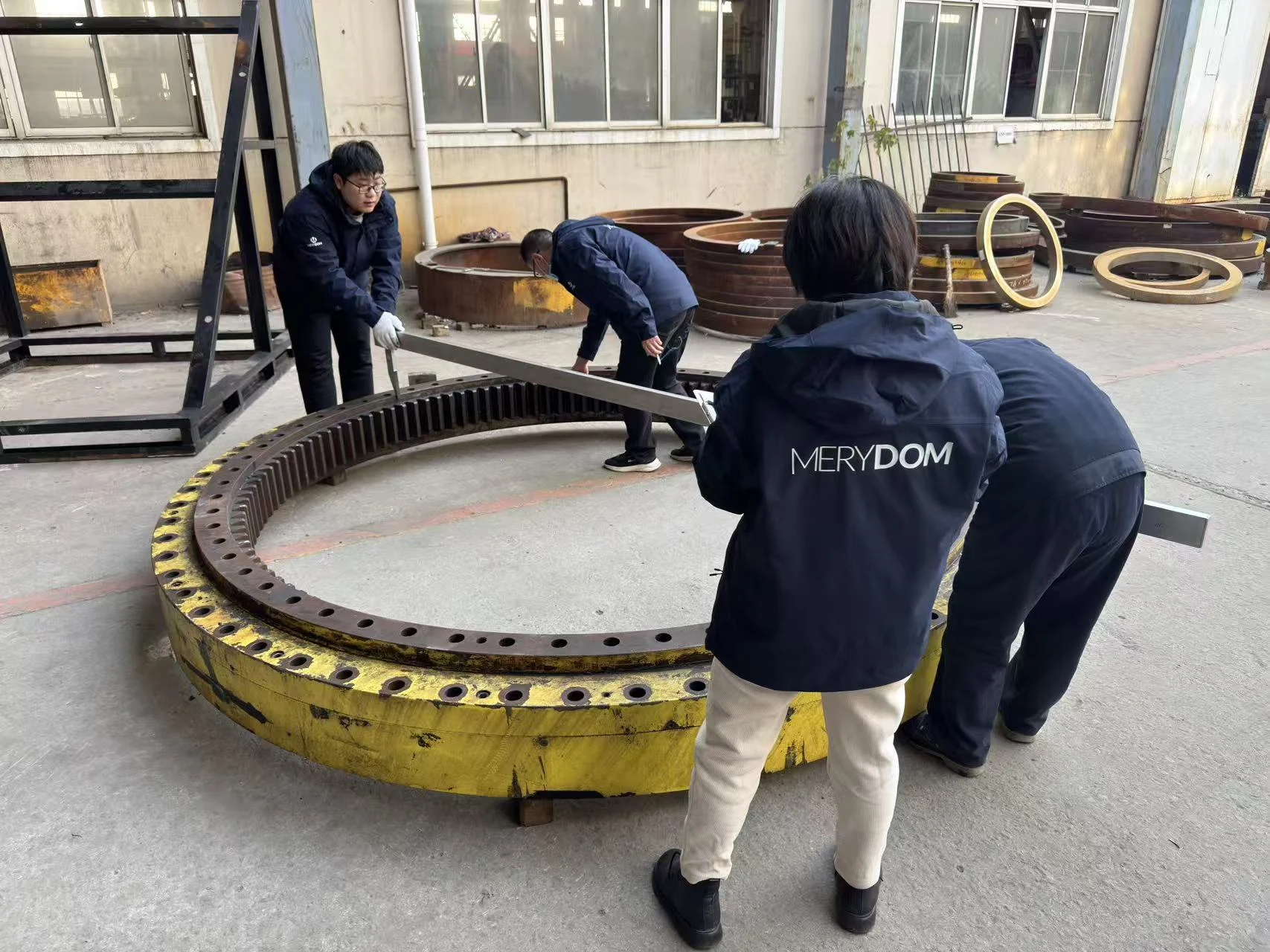
Diagnose slewing bearing raceway spalling by separating fatigue, overload, contamination, corrosion, lubrication and mounting distortion evidence.
Spalling or peeling is the loss of material from a rolling-contact surface. It is an end symptom, not a complete root cause. Similar flakes and pits can follow contact fatigue, shock overload, abrasive contamination, corrosion, insufficient lubrication or a mounting structure that concentrates load into one raceway sector.
A useful failure review therefore begins before the bearing is cleaned or dismantled. Operating history, damage location, grease, bolts, seals and companion surfaces must be documented together so the team can distinguish initiating causes from secondary damage.
Recognize the operating symptoms
Early signs can include intermittent clicking, rising rotation torque, vibration, metallic particles in purge grease or a localized increase in tilt clearance. Advanced spalling may create rough rotation and visible flakes. The angular position and load condition at which symptoms appear are valuable because they can identify a repeatedly loaded raceway sector.
Do not continue operating safety-critical equipment merely to reproduce a noise. Secure the machine according to the OEM procedure and record the condition that first produced the symptom. Note recent overloads, impacts, emergency stops, lubricant changes, seal damage, washdown events and structural repairs.
Map the damage pattern before assigning a cause
Mark the bearing orientation relative to the machine and photograph the raceway or removed material with scale and position references. Damage distributed around the full circumference suggests a different mechanism from a short sector beneath one stiffener. Opposing zones may correspond to reversing moment, while edge loading can indicate ring deformation, misalignment or incorrect internal geometry.
Record whether damage affects one raceway, both load directions, rollers or balls, separators and seals. Compare the pattern with the mounting support and bolt map. A root-cause report should explain why the proposed mechanism created the observed location and shape, not simply name a familiar failure mode.
Separate common initiating mechanisms
Rolling-contact fatigue usually develops after repeated stress cycles and may progress from subsurface cracking. Shock or static overload can create permanent indentations that later become fatigue origins. Abrasive particles cut raceways and rolling elements, while water can produce corrosion pits that act as stress raisers. Insufficient lubricant increases metal contact, heat and surface distress.
Mounting distortion creates nonuniform internal clearance and load sharing. Local high spots, flexible sectors or uneven bolt preload may overload a small group of rolling elements even when the calculated global load is acceptable. Review the mounting flatness and support stiffness guide when damage is concentrated.
- Fatigue: progressive damage tied to cycle spectrum and contact stress.
- Overload: indentations, deformation or fracture after exceptional load.
- Contamination: abrasive tracks, debris and damaged seals.
- Corrosion: water evidence, rust and pitting in idle or exposed zones.
- Distortion: localized loading aligned with support or bolt irregularity.
Preserve evidence for laboratory and engineering review
Collect representative grease and debris samples in clean labeled containers. Preserve fracture surfaces and do not grind or polish damage before metallurgical review. Record bearing number, serial number, service hours, load events, maintenance history, clearance trend and photographs of the installed structure.
Material chemistry, hardness and effective case depth can confirm whether manufacturing requirements were achieved, but a compliant material report does not exclude overload or lubrication failure. The raceway hardness guide explains how to interpret these records without treating one hardness value as the entire investigation.
Correct the system, not only the damaged bearing
A replacement bearing will repeat the failure if the initiating load, support, bolt, seal or lubrication problem remains. The corrective plan should address verified causes, define installation controls and establish new baseline measurements. When evidence is incomplete, state uncertainty and identify the additional checks needed rather than forcing a single conclusion.
FAQ
Is raceway spalling always a material defect?
No. Load, lubrication, contamination, corrosion and mounting distortion are frequent alternative causes.
Should the bearing be cleaned before inspection?
Document and sample the as-found condition first so grease, debris and location evidence are not lost.
Can a new bearing solve the problem by itself?
Only if the initiating system cause is also removed. Otherwise damage can recur.
Engineering references
For a drawing-based review, send MERYDOM the application, load cases, dimensions and required documentation. Final selection and service instructions must follow the approved drawing and equipment manufacturer requirements.