
A deck crane slewing bearing works in salt spray, washdown and ship motion while its records remain part of the crane technical file. The ring may use familiar bearing geometry, but the environmental protection, load definition, inspection scope and documentation around it distinguish a marine project from a general land application.
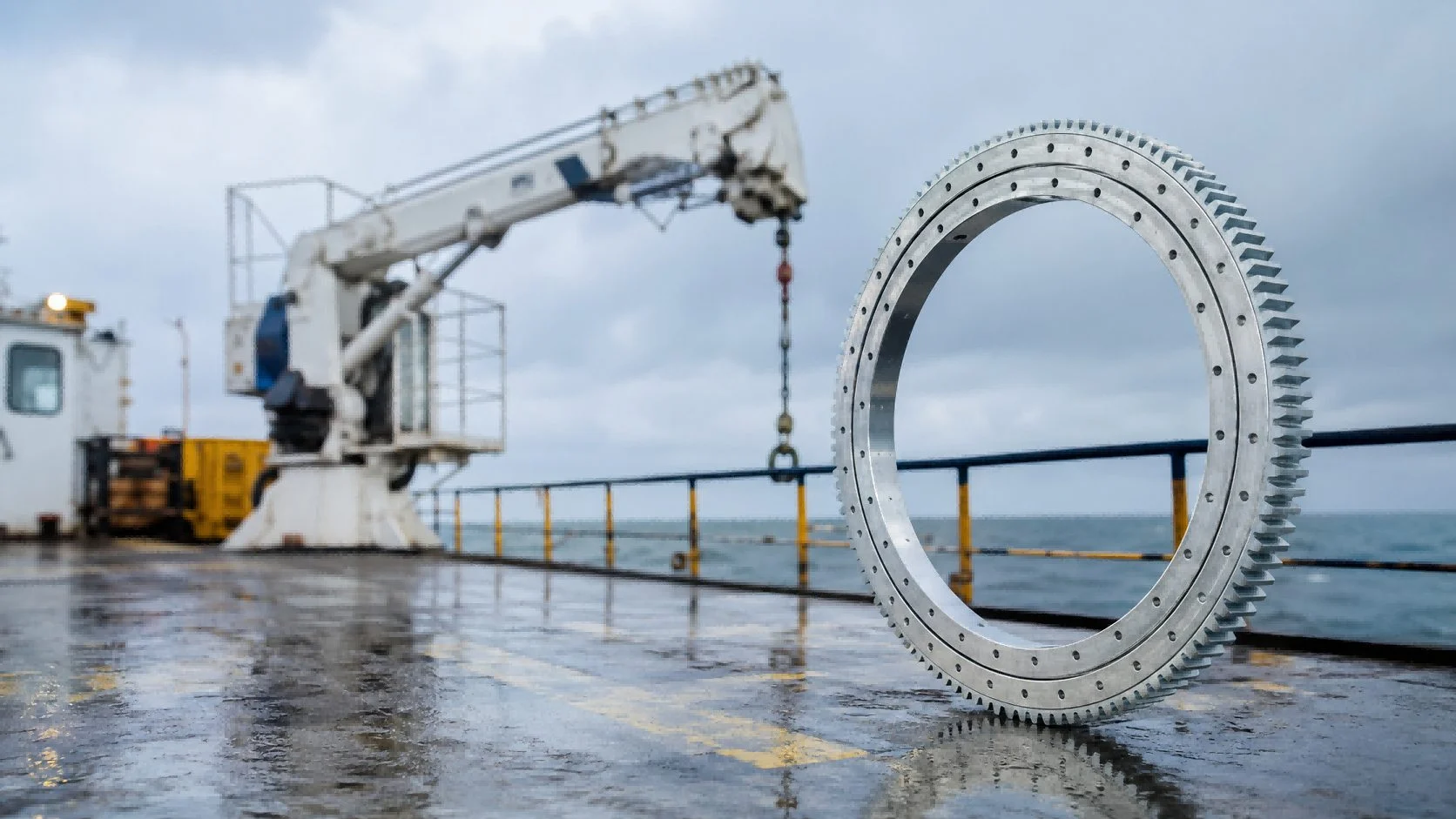
The load case moves with the vessel
At sea, static list and trim alter the load direction while roll, pitch and heave introduce accelerations beyond the calm-water chart. A marine bearing review therefore needs the crane load cases together with the agreed vessel-motion and dynamic parameters. The resulting radial, axial and tilting-moment combinations may justify additional reserve or a different structure from a similar land crane.
Knuckle-boom and deck cranes may begin with 011/012 external-gear or 013/014 internal-gear four-point contact ball structures. Larger hose-handling, offshore or heavy-deck duties may require double-row ball or three-row roller structures after full load review.
Send operating and survival cases, list and trim limits, vessel accelerations, boom positions, lifted loads and any classification-society factors agreed for the crane design.
Corrosion protection is a specification of its own
Barge cranes and deck cranes can remain inside a salt-laden wet zone even when the crane is idle. Wind-driven spray, washdown water and condensation collect around the pedestal joint, so exposed ring surfaces need a documented marine coating system while machined mounting faces, bolt interfaces and gear surfaces need compatible preservation. The sealing review should consider a primary elastomer seal, a protective flinger or secondary barrier, positive drainage and grease-purge paths that expel moisture instead of trapping it against the raceway.
- Surface protection systemDefine the primer, topcoat or buyer-applied paint interface for exposed ring surfaces and preserve machined faces for transport and yard storage.
- Sealing and spray protectionReview direct spray, washdown and drainage; add protective flingers or a second barrier where the machine design requires it.
- Corrosion-resistant detailsSpecify grease fittings, plugs, fastener interfaces and unused tapped-hole protection so small exposed steel items do not become corrosion initiation points.
- Relubrication as moisture controlFresh grease and outward seal purge help keep moisture from the raceway; the crane manual should define intervals and full-rotation procedures.
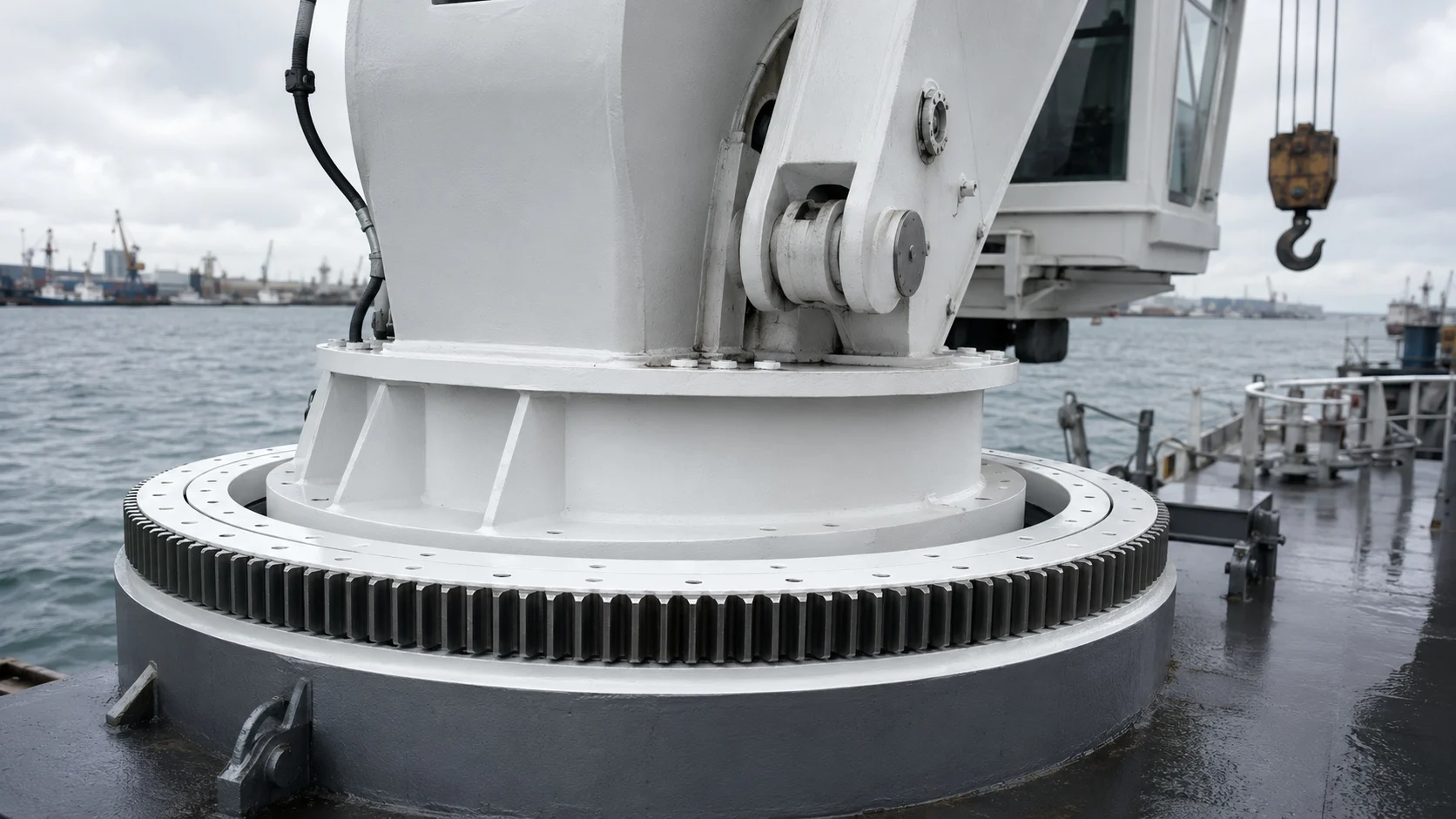
Classification documentation is a deliverable
Marine cranes may be built under DNV, ABS, Lloyd’s Register, Bureau Veritas, RINA or another society selected for the vessel. The bearing inspection and documentation package must be agreed with the crane manufacturer and survey plan before production. It may include EN 10204 3.1 certificates, dimensional and clearance reports, raceway hardness and effective case-depth results, traceability and specified ultrasonic or magnetic-particle testing.
Where EN 10204 3.2 or third-party witnessed inspection is required, hold points, witness points, responsible parties and document formats should be fixed at order so surveyor attendance does not delay production. Review MERYDOM inspection capability and traceability before defining the project plan.

Marine customers can also verify the factory, supplier qualification data and customer visit records before order placement.
Service life at sea: what actually degrades
Water ingress, emulsified grease, damaged seals and coating breakdown at the ring-to-pedestal interface are recurring marine concerns. A useful condition record combines grease appearance or laboratory results, tilt-clearance measurements at the same crane position, seal condition and coating inspection around the joint line.
A replacement RFQ should include the corrosion and water-ingress history. If the old ring failed because the environment reached the raceway, a new part to the same unmodified protection specification may only repeat the problem.
Marine Cranes slewing bearing FAQ
What makes a marine crane slewing bearing different?
The bearing structure may be similar to a land-crane design, but the project package normally adds marine surface protection, sealing review, corrosion-resistant details, vessel-motion load cases and classification-related inspection documentation.
How does vessel motion affect selection?
List and trim alter the load direction, while roll, pitch and heave introduce additional accelerations. The crane designer must provide the agreed motion and dynamic parameters so radial, axial and tilting-moment loads can be checked together.
Can classification-society witnessing be supported?
Inspection and documentation can be arranged to the buyer and classification-society requirements when the witnessing points, hold points, certificates and responsibilities are agreed before production.
How should a deck-crane bearing be lubricated?
Follow the crane maintenance manual and grease by operating hours and environmental exposure. Rotate as required during lubrication so fresh grease reaches the full raceway, and inspect outward purge and seal condition after washdown.
What commonly degrades marine slewing bearings?
Water ingress, emulsified grease, damaged seals and coating breakdown at interfaces are frequent concerns. Grease condition, tilt-clearance trend and corrosion at the pedestal joint should be inspected together.
Send the crane load cases and marine specification
Include vessel-motion parameters, coating and sealing requirements, gear data, bolt interface, classification plan and documentation scope.