
Port machinery works to the vessel schedule. Portal cranes, mobile harbour cranes, grab unloaders and ship loaders may perform repeated load-on and load-off slews throughout a shift, so fatigue reserve, gear durability, sealing, automatic lubrication and planned replacement become central purchasing criteria.
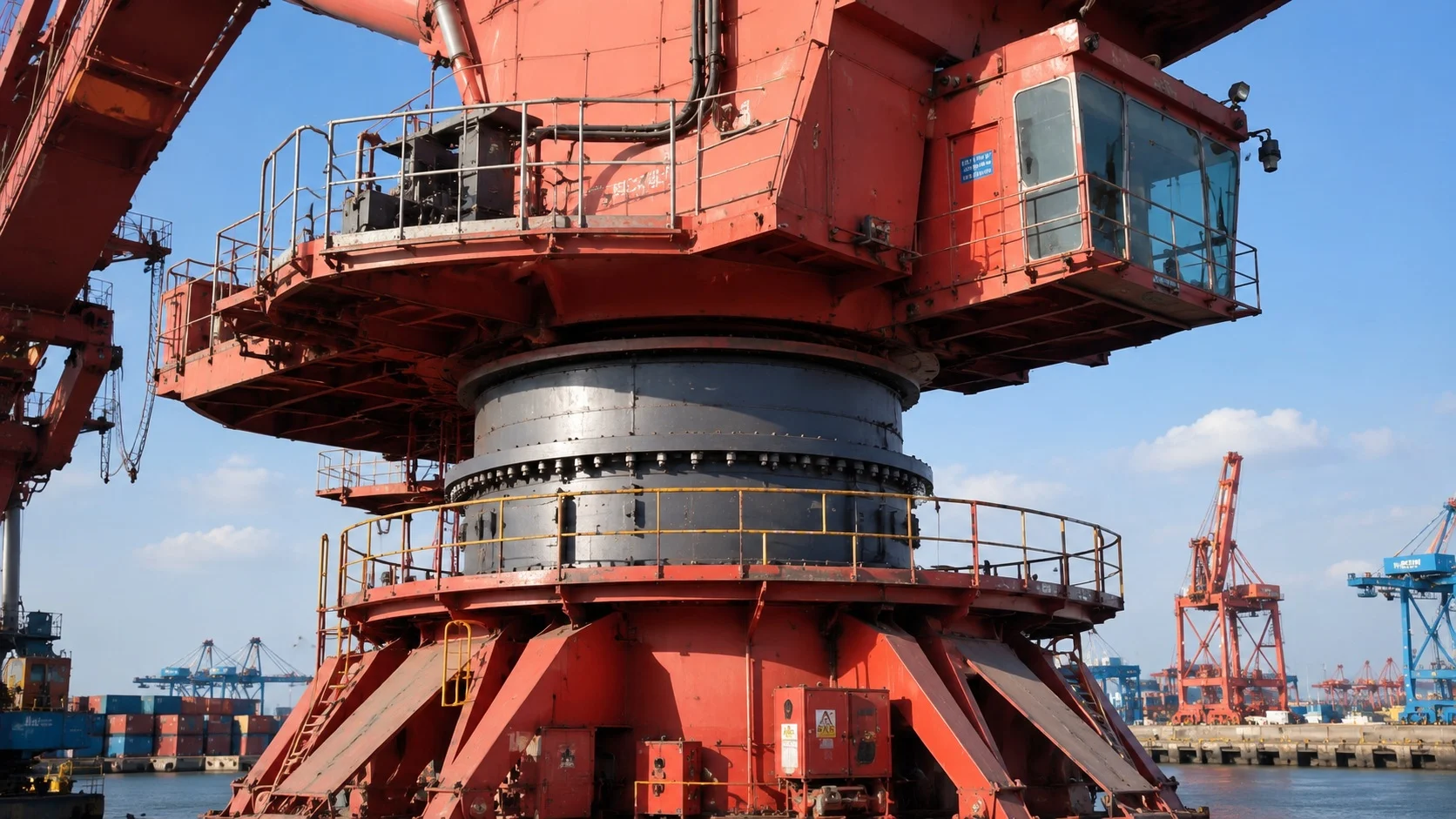
Grab duty: a fatigue benchmark
Grab unloaders and bulk-handling cranes repeat dig, hoist, slew, discharge and return cycles throughout vessel operations. Static capacity remains a necessary gate, but the load spectrum and accumulated partial rotations govern long-term fatigue. Medium machines may use double-row ball structures, while large portal and mobile harbour cranes commonly move toward 131/132 or 133/134 three-row roller structures.
Fatigue reserve
Evaluate representative operating spectra, not only one peak load, and include realistic dynamic and duty factors agreed with the machine designer.
Support and joint life
Continuous cycling also works the mounting structure and bolt preload; seat deflection can invalidate a bearing-only calculation.
Gears and lubrication work continuously too
Port machinery frequently slews under load, so open-gear wear must be reviewed with the raceway. Hardened teeth, verified tooth geometry, controlled backlash and a documented lubrication method are common requirements for high-cycle machines. The final gear execution must match the drive, shock loading and service inspection plan.
Manual calendar greasing may be insufficient for continuous grab duty. Centralised automatic lubrication can meter grease to the raceways and open gear by operating cycles or machine hours, but grease-port positions and distribution lines should be specified before bearing manufacture.
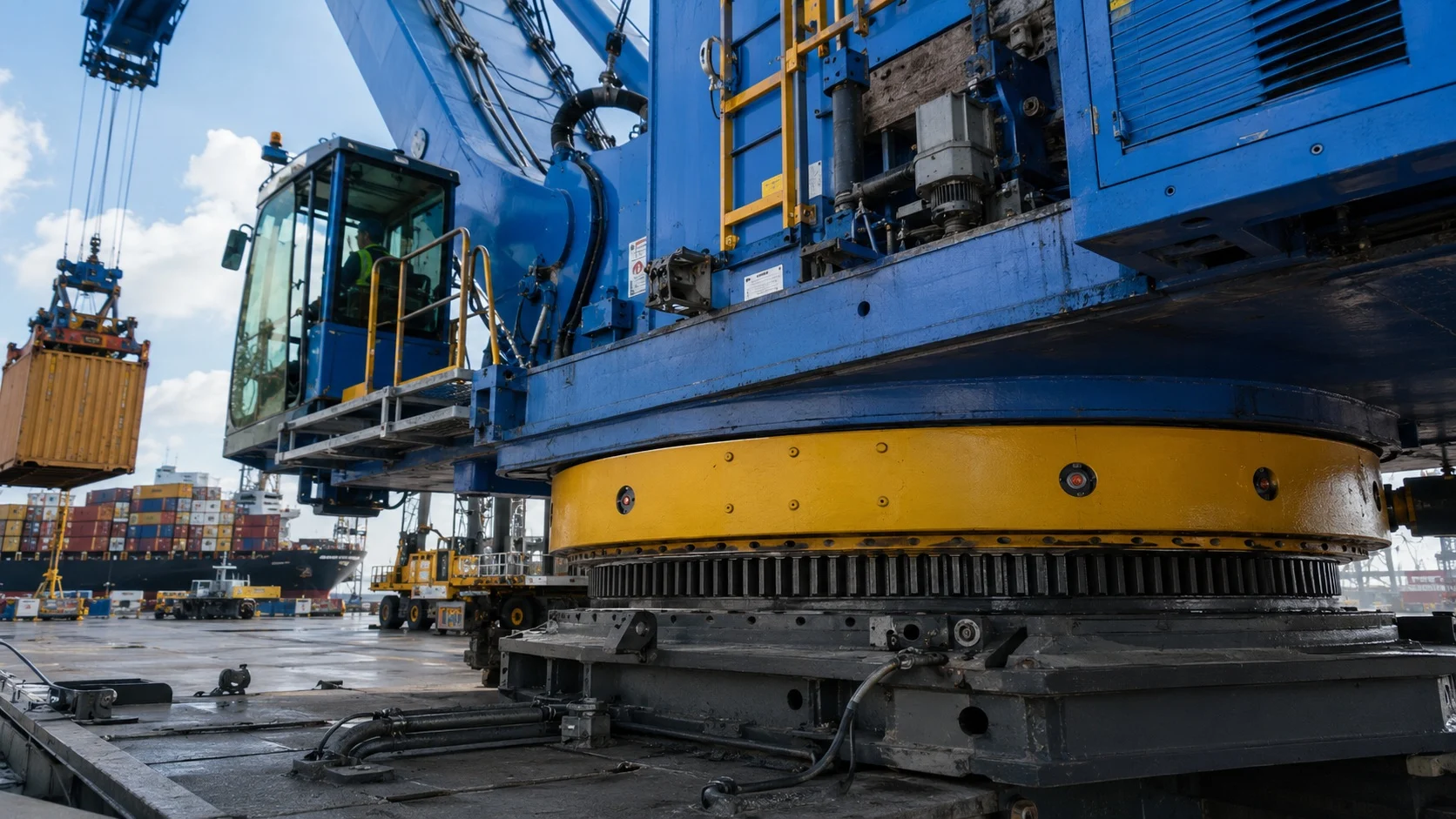
- Raceway deliveryConfirm that grease reaches the complete raceway and that outlet purge is visible at the intended seal locations.
- Open-gear deliveryUse the lubricant and application method specified for the gear material, speed, load and ambient contamination.
- Blocked-line detectionUnexpected changes in grease use, pressure or purge should trigger inspection of the automatic system.
Salt plus cargo dust: a sealing double threat
Coastal air attacks exposed surfaces while coal, ore, clinker, grain and other cargo dust collect around seals and gear teeth. The practical defence is a complete system: intact lip seals, protective flingers or labyrinth covers where needed, surface protection matched to the terminal paint scheme and regular outward grease purge that carries contamination away from the seal interface.
State the cargo type, washdown method, salt exposure, ambient temperature and automatic-lubrication arrangement in the RFQ so sealing, coatings and fittings can be reviewed together.
Berth economics favour planned replacement
A critical berth machine can lose far more in downtime than the cost of its slewing ring. Condition-based replacement therefore uses repeatable tilt-clearance readings, drive-current or pressure trends, grease analysis, gear inspection and seal condition to plan work into a maintenance window. A preserved strategic spare may be justified for a single machine with long replacement lead time.
Replacement review should include the old marking, interface and gear data plus the failure history. That allows engineering to consider sealing upgrades, harder gearing, altered lubrication ports or improved protection rather than simply reproducing the old drawing.
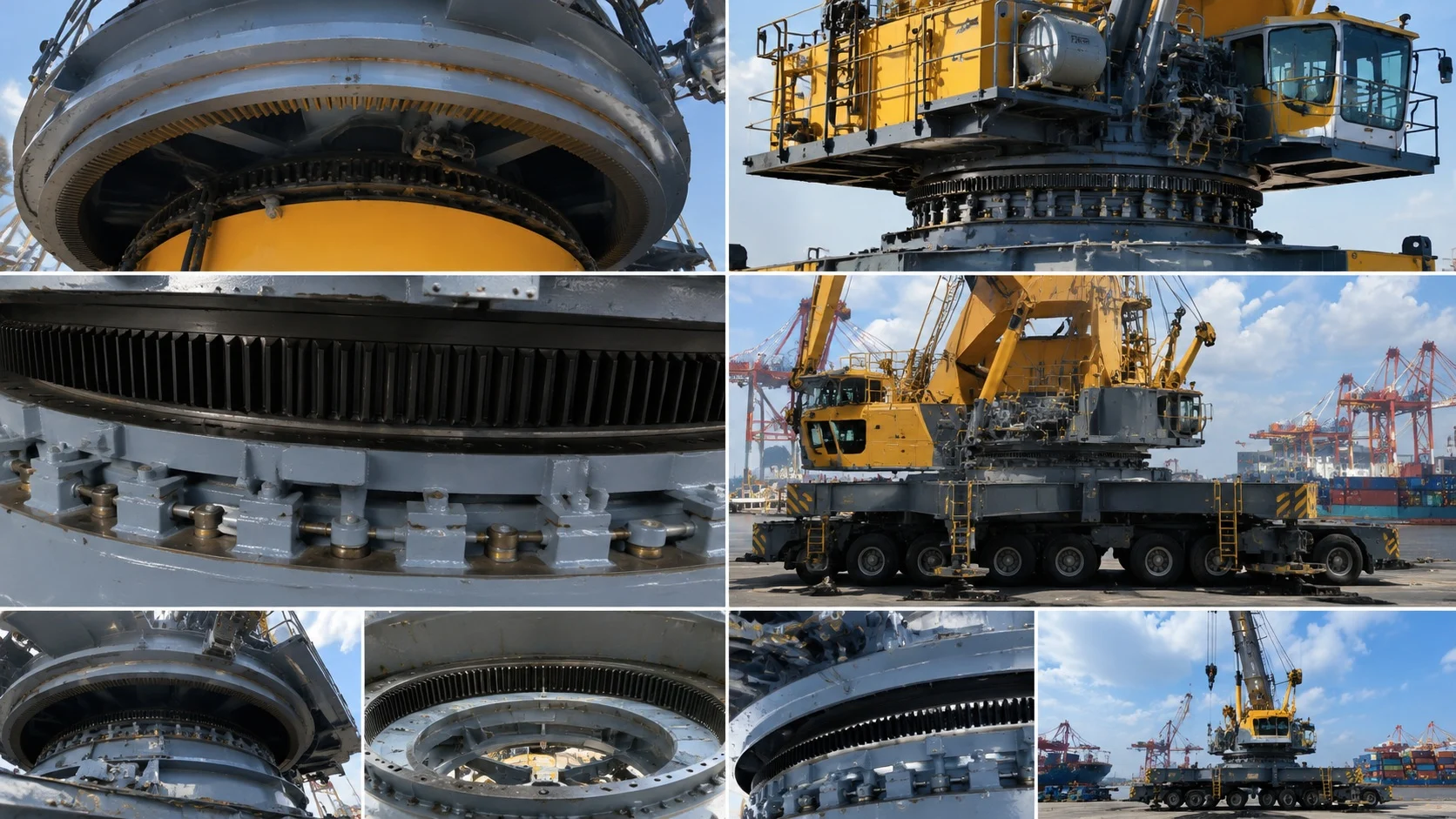
Port equipment buyers can review MERYDOM factory evidence, production equipment, supplier qualification data and customer visit records before qualification.
Port Machinery slewing bearing FAQ
Which slewing bearing structures are used in port cranes?
Double-row ball bearings are used in some medium classes, while large portal and mobile harbour cranes frequently use three-row roller structures for high combined-load capacity. The actual choice depends on the load spectrum, duty cycle, support structure, gearing and maintenance strategy.
Why does grab duty accelerate wear?
Repeated partial slews with load application and release accumulate fatigue cycles on the raceways and gear flanks. Cargo dust and continuous operation can also reduce lubrication and seal life if the maintenance system is not designed for the duty.
How should a port slewing bearing be lubricated?
Critical high-cycle machines commonly use centralised automatic lubrication for both raceways and open gearing. Grease delivery points, quantity and intervals should be defined with the machine designer and verified during commissioning.
How can terminals reduce unplanned downtime?
Trend tilt clearance, drive current or pressure, grease condition, gear wear and seal condition at repeatable machine positions. Order a replacement before the trend reaches the machine limit, and consider a preserved strategic spare for a single critical machine.
Can a replacement improve the original specification?
Yes. Failure history may justify upgraded sealing, surface protection, gear hardening, lubrication-port positions or documentation. The old drawing should be reviewed together with operating conditions and observed damage.
Send the duty spectrum and terminal environment
Include the machine type, operating cycles, governing loads, cargo dust, corrosion exposure, lubrication layout, gear data and maintenance strategy.