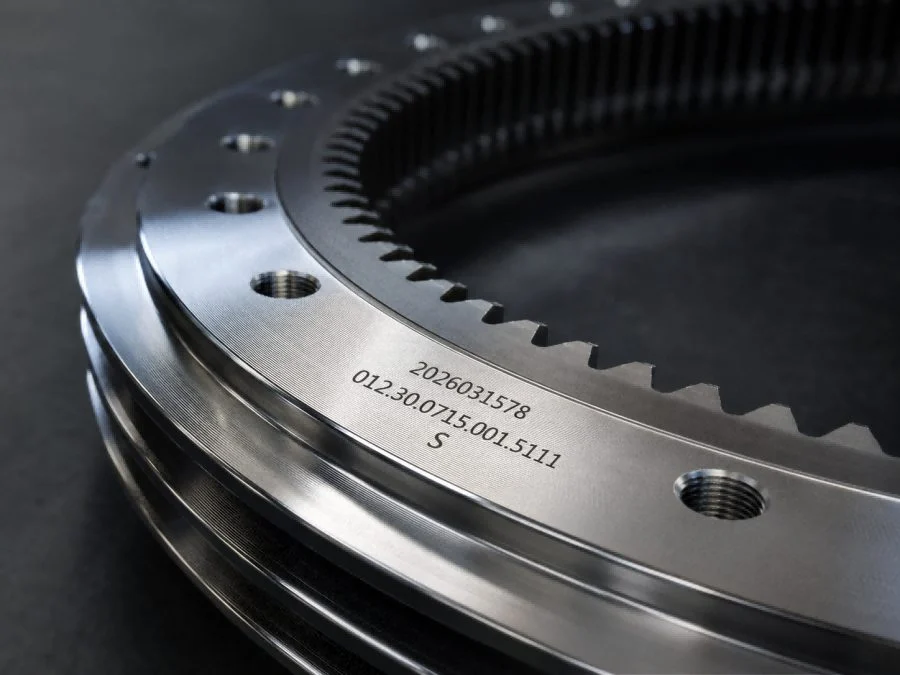
Prepare a complete slewing bearing RFQ covering drawings, load cases, gearing, duty, quantities, inspection documents and commercial assumptions.
A useful slewing bearing quotation is an engineering response to a defined requirement. When an RFQ contains only outside diameter and price target, suppliers must guess the load, gear, bolt, material, accuracy and documentation scope. The resulting offers may look comparable while describing different products.
A structured RFQ package reduces clarification cycles and exposes technical differences before purchase. It should separate mandatory requirements from preferences and state which data are preliminary, approved or missing.
Identify the project and supply route
State whether the request is for a new OEM design, catalogue selection, build-to-print part or replacement interchange. Include equipment type, operating location, annual quantity, prototype quantity, target schedule, delivery destination and expected service support. The supplier needs to know whether engineering selection or strict drawing compliance controls the offer.
Provide part number, drawing number and revision with a clear document list. If a sample or used bearing is available, explain whether it is a reference, the controlling specification or only dimensional evidence. Photographs cannot replace a readable drawing for production release.
Provide loads and operating duty
For design review, send simultaneous axial load, radial load and tilting moment combinations with service factors, load duration and movement state. Include drive torque, speed, oscillation angle, cycles, shock, temperature and environmental exposure. Separate operating, test, transport and survival cases.
Document how loads were derived and which supplier method should be used for safety and life. The load-case calculation guide provides a practical table structure. If load data are unavailable for a replacement, state that limitation so the supplier does not present dimensional interchange as a life verification.
Define every mechanical interface
Include outside and inside envelopes, total height, pilot fits, bolt circles, hole quantities, thread details, ring rotation, mounting orientation and lubrication access. For gears, provide internal or external arrangement, module, tooth count, pressure angle, face width, hardness and pinion information. Identify the datum system and tolerance priorities.
Send companion-structure information when stiffness, preload or precision matters. Note whether the bearing must match an existing pinion, bolt pattern or hydraulic swivel. For replacement projects, use the interchange verification checklist rather than relying on OD, ID and height.
- Approved drawing and 3D model when available.
- Load-case and duty table with units and factors.
- Gear, pinion, bolt and mounting-interface data.
- Material, heat treatment, coating and sealing requirements.
- Quantity, delivery destination, packing and documentation scope.
- List of unknowns requiring supplier assumptions.
Agree quality evidence before price comparison
Specify material certificates, heat-treatment reports, dimensional inspection, gear records, rotation torque, serial traceability, first article inspection, witness points and final photographs as needed. State required language, electronic format and document submission timing. These requirements affect cost and lead time and should not appear after the order is placed.
Use the inspection report guide to distinguish routine certificates from a full first article package. Ask suppliers to list exclusions and deviations explicitly rather than assuming silence means compliance.
Compare offers on one compliance matrix
Create a line-by-line table showing requirement, supplier response, evidence, deviation and action owner. Normalize currency, incoterm, tooling, sample cost, document scope, warranty and lead-time basis. A lower unit price may exclude engineering review, gear hardening, inspection or export packing included elsewhere.
Close technical questions before commercial approval. The final purchase order should reference the same approved drawing, revision, deviation list and document matrix used for selection.
FAQ
What is the minimum data for a useful RFQ?
Provide the controlling drawing or full dimensions, application and duty, gear and bolt interfaces, quantity and required documents.
Can a supplier quote before loads are known?
A dimensional or budget quote may be possible, but it must not be presented as verified load or life selection.
When should FAI requirements be stated?
Before quotation, because samples, measurements, witnesses and reports affect production planning and cost.
Engineering references
For a drawing-based review, send MERYDOM the application, load cases, dimensions and required documentation. Final selection and service instructions must follow the approved drawing and equipment manufacturer requirements.