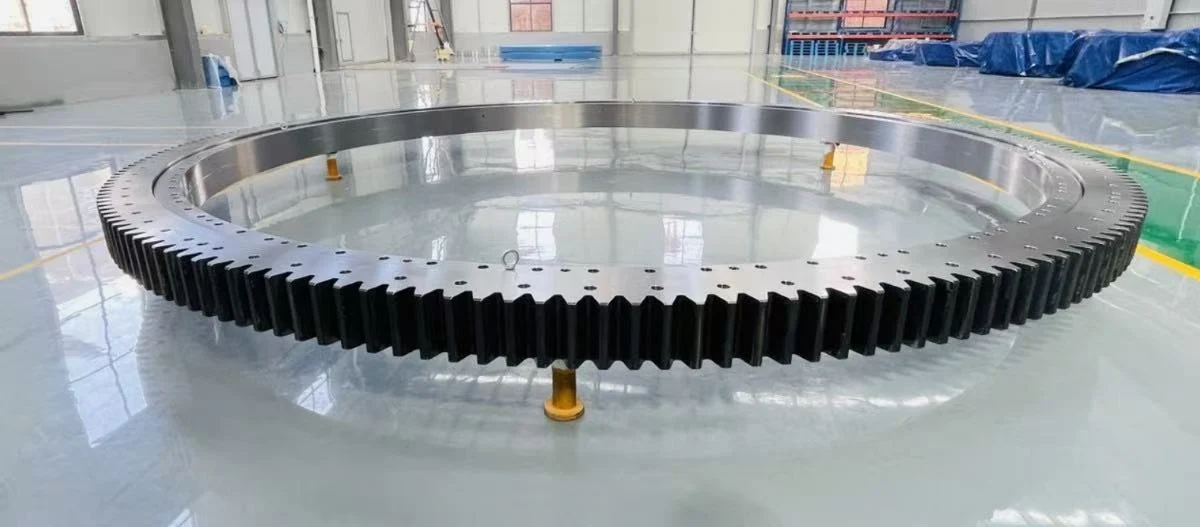
Inside a pair of heavy-duty, double-row marine slewing bearings. See how zero clearance, ground mounting surfaces and 42CrMo material records fit together.
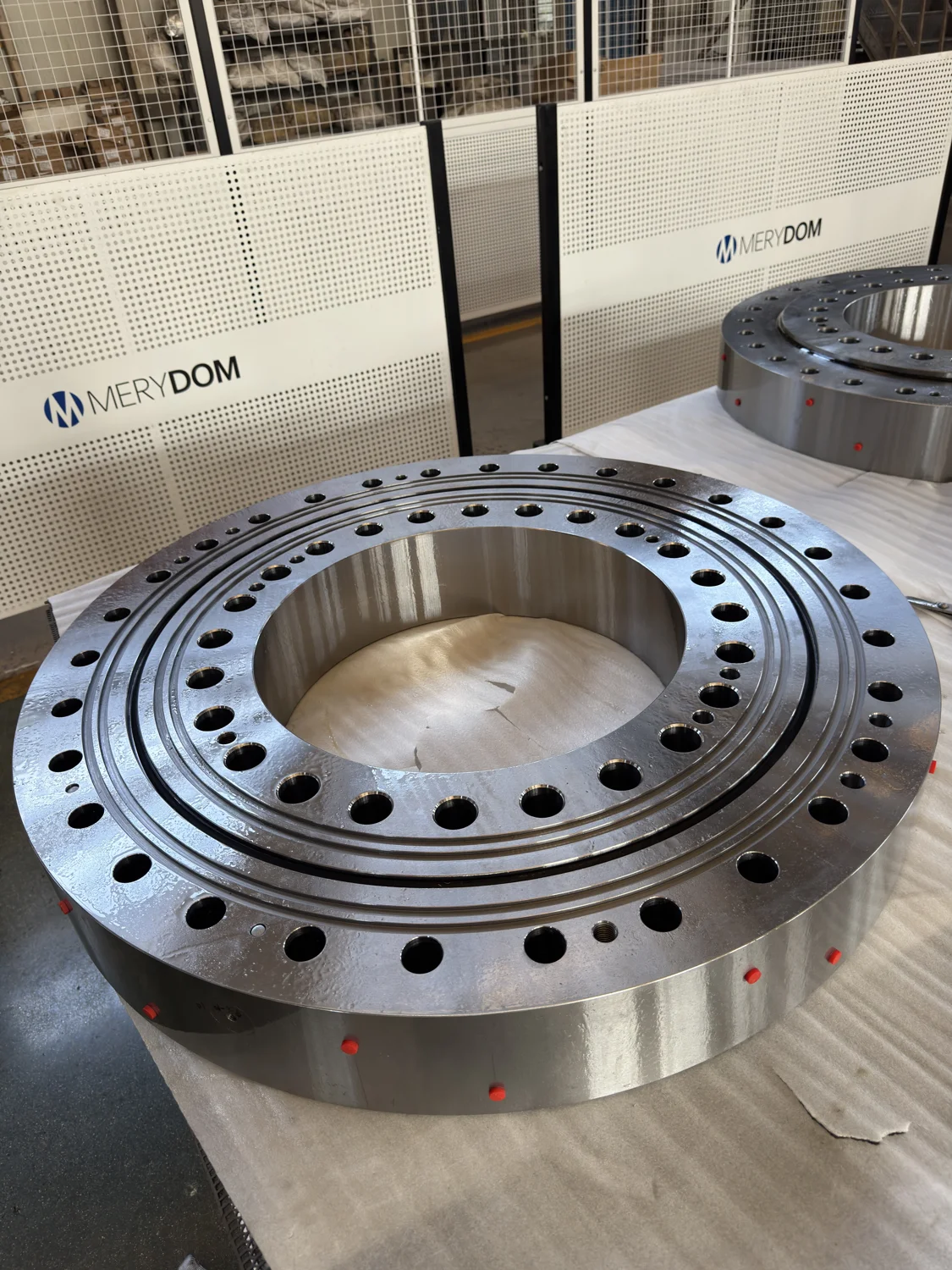
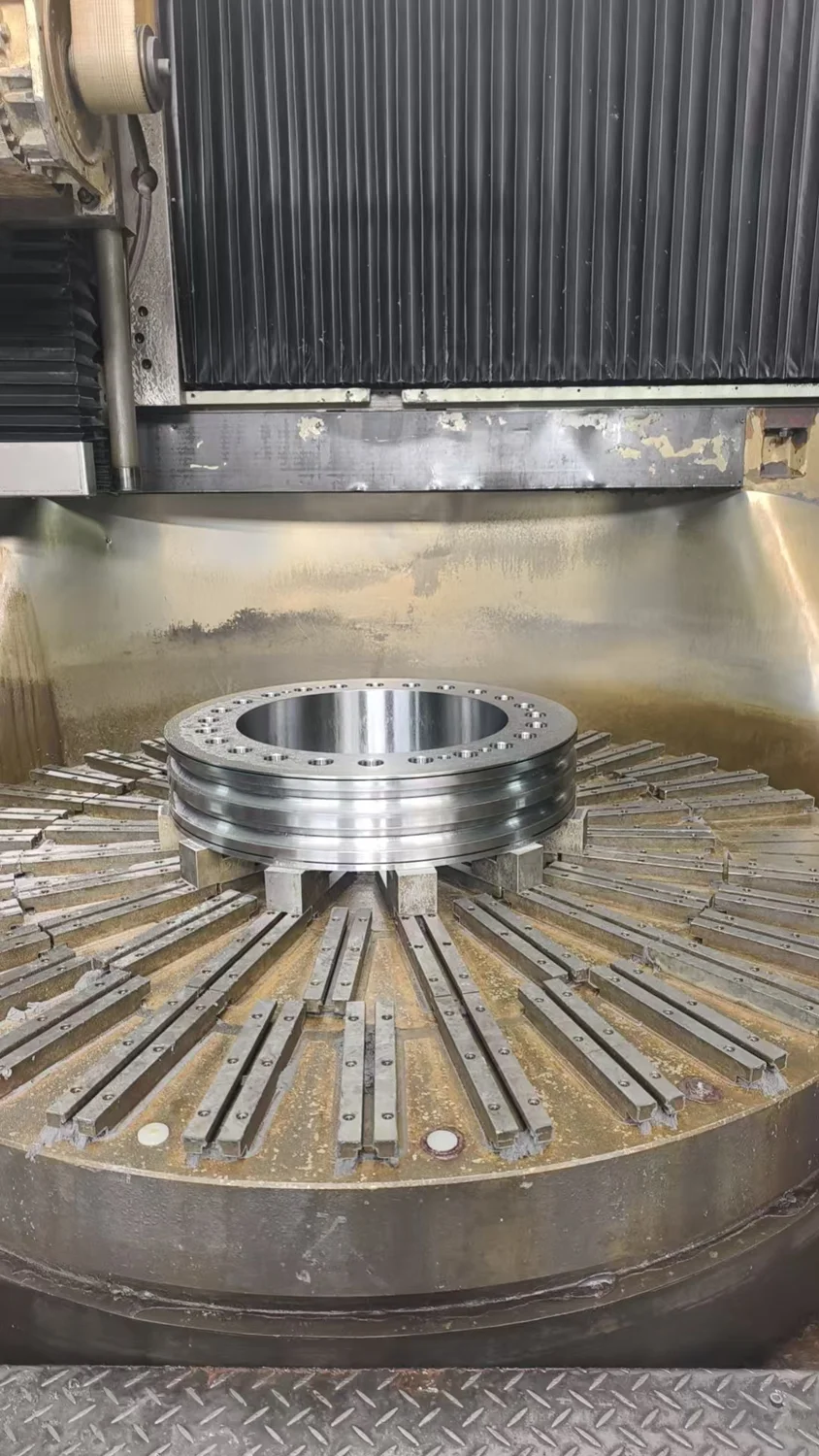
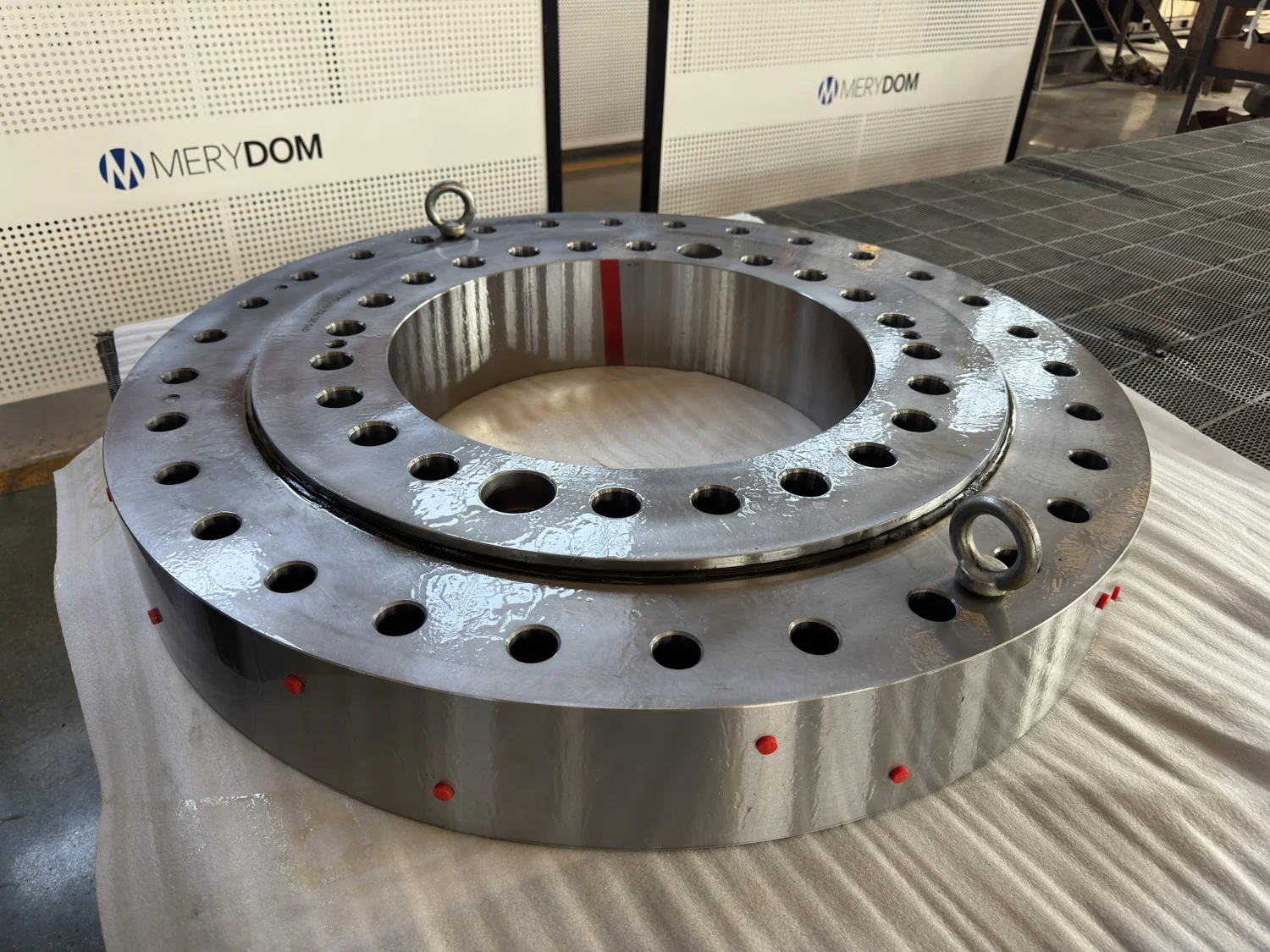
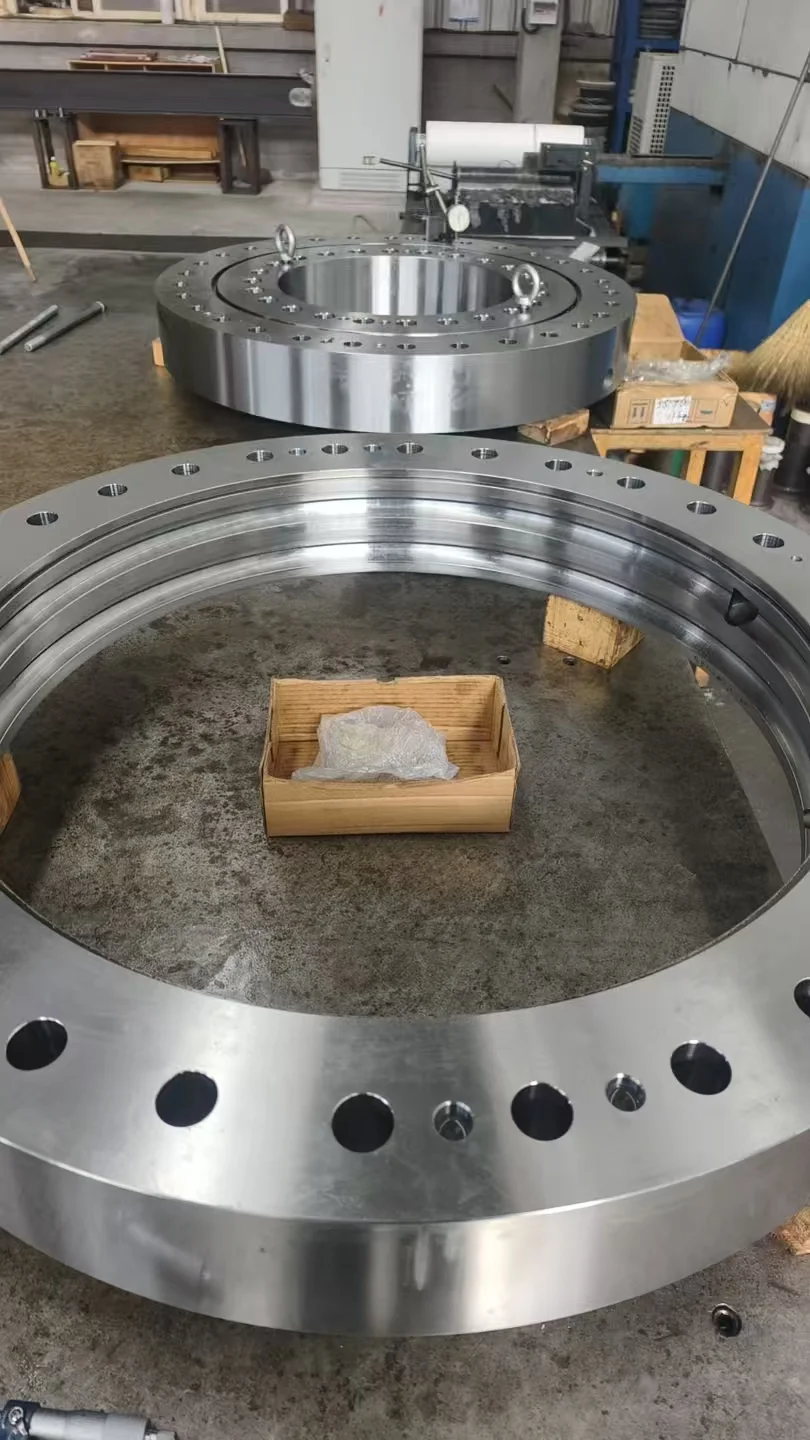
We built two double-row ball slewing bearings for a European customer’s heavy-duty marine equipment. The order called for zero internal clearance, 42CrMo steel and precision grinding across the full bore, outside diameter and end faces. The workshop photographs show both the ring on the machine table and the finished assemblies. The engineering question behind the order is easiest to see when the load changes direction.
Catalog examples for comparison La Leonessa 2s double-row series · VS057B01 dimensions and mounting interfaces.
What moves when the load reverses?
Imagine a load acting to one side of a rotating platform. When the overturning moment reverses, the load shifts to the opposite side of the rolling contacts. With positive clearance, the rings can move a small distance relative to each other while that clearance is taken up. A slight tilt at the bearing can be noticeable at the end of a long arm. Removing that free movement helps the equipment respond more consistently through the reversal.
Related reading Measuring clearance and wear.
In a bearing specification, zero clearance describes the target internal play in the agreed direction and reference condition. Axial play is measured along the rotation axis, radial play across it. Under working load the contacts, rings and supporting structure still deflect elastically. Gear backlash, where a geared drive is used, is a separate source of lost motion.
Why grind the bore, outside diameter and faces?
On these two units we ground all three types of surface. A locating diameter establishes the ring position where the assembly drawing calls for a pilot fit. The mounting faces seat against the machine flanges. A high spot under a mounting face can distort a ring as the bolts are tightened, changing the feel and torque of rotation. A precision-ground bearing therefore needs a mating flange with the specified flatness and stiffness.
How much preload is appropriate?
Preload puts an initial load into the rolling contacts before the machine applies its working load. A zero-clearance designation alone gives no preload value. More preload can improve stiffness but can also raise starting torque and heat generation. For a slow drive that starts frequently, starting torque may be as important to the designer as movement at the end of the arm.
What the 3.1 material record tells the buyer
The project includes material test documentation (MTC) for the 42CrMo steel and an EN 10204 type 3.1 inspection certificate. A 3.1 certificate reports the results of specific inspection and is validated by the manufacturer’s authorized inspection representative independent of production. Match the heat number to the ring’s traceability record. Finished-bearing play, runout and turning torque belong in the dimensional and functional inspection records.
Related reading on 42CrMo raceways
Agree on the test before ordering
Specify the load direction, allowable movement at the working point and the radius at which it matters. For acceptance, agree on the mounting condition, measuring load, indicator position and permissible reading. Record turning torque separately under stated lubrication and temperature conditions. This gives the shipyard and bearing supplier a common basis for comparing workshop and installed readings.
Mounting surface flatness and support stiffness